
2026 – The Year of Cardboard Gardens and Mulch
Last year’s garden did not go well.
That is not dramatic. It is just accurate.
A few beds were built, plants went in, and then southeast Georgia did what it does best—heat, drought, humidity, and conditions that seem to favor absolutely everything except what was intentionally planted.
At the same time, every squirrel on five acres apparently agreed that my raised beds were the perfect place to bury things. What they planted grew far better than what I did. Weeds, grass, mystery seedlings, and tree saplings quickly took over, and once established, they were nearly impossible to pull.
So this year started differently.
Resetting the Garden
The goal this season was not abundance.
It was control.
That lesson arrived immediately when the wooden handle of my rake snapped from dry rot within the first minute of working the first bed. A fitting reminder that neglected spaces do not quietly wait for you to come back to them.
After replacing the rake, I tilled the beds to loosen compacted soil, break apart roots, and remove as much existing plant material as possible. It was not a perfect reset, but it was enough to start rebuilding the space into something manageable again.
From there, cardboard became the foundation of almost everything.
Using Cardboard as a Base Layer
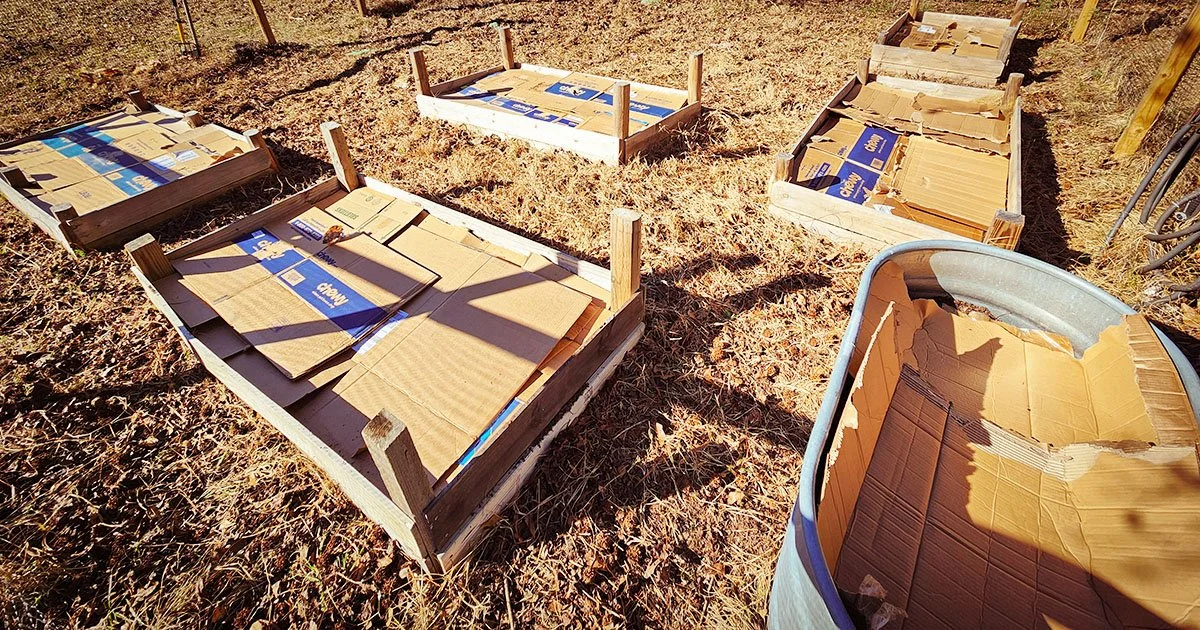
Originally, the plan was simple: cover the beds and walkways with cardboard to suppress weeds and hopefully discourage squirrels from constantly digging in loose soil.
But once I started working through the garden, the approach evolved.
Instead of using cardboard only as temporary weed suppression, I began using it as the base layer for the garden beds themselves. After laying the cardboard down, I added my compost blend and garden soil directly on top to create new planting areas while smothering much of what was already underneath.
For beds that were not ready to plant yet, I kept the top covered with additional cardboard. That helped prevent weeds from returning while also reducing opportunities for pests or squirrels to treat the beds like a buffet or storage unit.
A Few Lessons Learned
There were also a few learning moments along the way.
At first, I tried planting directly through the cardboard by cutting holes where each plant start would go. Technically, it worked—but it quickly became clear that it was far easier to plant first and then mulch around the starts afterward.
Trying to line up holes, cut through wet cardboard, and fit plants into exact openings added far more work than necessary. Mulching around established plants turned out to be simpler, faster, and easier to adjust as things grew.
That is probably how the rest of this gardening season will go: experimenting, adjusting, and figuring out what works best for this particular space.
Why Cardboard?
Cardboard is not a miracle solution, but it checks a lot of boxes for a difficult garden environment.
In theory, it should:
Suppress weeds and grass growth by blocking light
Help retain moisture during long hot stretches
Break down over time and add organic material back into the soil
Reduce exposed bare soil that invites digging and weed seeds
Create a manageable starting point instead of constantly fighting established growth
Will it solve everything? Probably not.
Southeast Georgia still has humidity, aggressive weeds, insects, and wildlife with their own opinions about garden ownership. But doing nothing would guarantee a repeat of last year.
Why Try Again?
Last year clarified a few things:
Bare soil is an invitation
Weed pressure here is constant, not seasonal
Wildlife will always participate, whether invited or not
Building manageable systems matters more than ambitious planting plans
This year’s garden is slower, more practical, and far more focused on reducing problems before they start.
If the cardboard method works well long-term, that will be noted.
If parts of it fail, that will be noted too.
Either way, this version of the garden already feels more manageable than the one that got away last year.
Bonus: I also mulched the surrounding areas around the garden beds and walk ways, was it necessary? No, but it looked nice and kept my shopping habits from staring back at me every time I go to the garden.
