
The Never-Ending Horse Farm Problem: Manure Management
This post may contain affiliate links. If you purchase through these links, I may earn a small commission at no additional cost to you. As an Amazon Associate, I earn from qualifying purchases. I only recommend products, services, and resources that I personally use, trust, or believe may provide value to my readers.
•••
This year’s manure management plan is simple: move it closer to the road and hope someone else wants it.
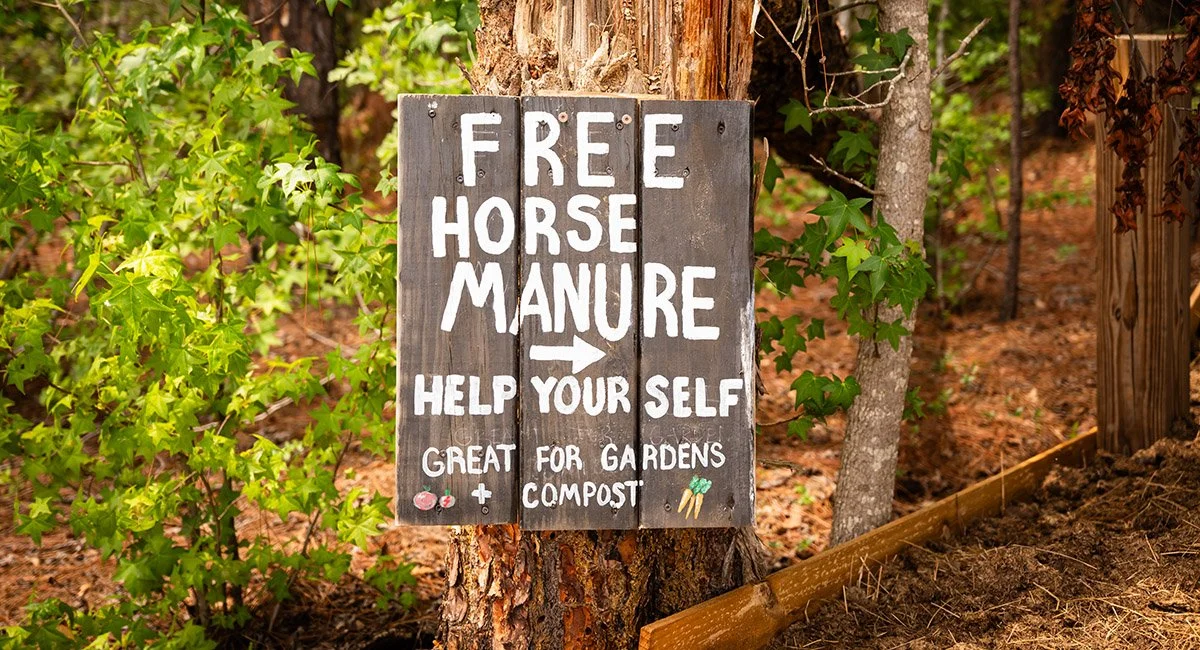
After two years of mucking, piling, and spreading manure across resting fields, I’ve decided to try a different approach. The new manure pile sits near the front of the property, close to the driveway and roadside, with the eventual addition of a straightforward sign: Free Horse Manure. I hand-made mine from some scrap wood and acrylic paint, but if you’re not creative, Amazon sells an affordable aluminum “Free Manure” sign.
The idea isn’t revolutionary. The goal is affordable removal. If local gardeners or farms feel inspired to take some home, that’s less manure on the property and fewer opportunities for insects to decide it’s the ideal place to raise a family.
Why Change What Was “Working”
To be clear, the previous system wasn’t a failure—at least not on paper.
Spreading manure in resting fields has been sufficient for managing horse worm loads and has done a reasonable job with black flies and stable flies. Where it has fallen apart is eye gnats. This year, they’re significantly worse than in previous seasons.
At this point, I’m comfortable speculating that spreading manure may be creating an ideal breeding environment for them. That may not be the only factor, but it’s difficult to ignore the timing and density.
It’s also worth noting that if your property sits near large-scale agricultural land in southeast Georgia, gnats are part of the deal—especially during tilling season. Proximity matters. No amount of on-farm perfection fully cancels out what’s happening next door.
Still, that doesn’t mean doing nothing.
What’s Already in Place
All horses here receive an insect growth regulator (IGR) feed-through supplement year-round (I like this one a lot, and a 10lb bag lasts me a while for 2 horses). In this climate, stopping in the winter has never made sense—cold snaps are inconsistent, and insects don’t reliably reset.
The IGR works by interfering with the formation of the fly larvae’s exoskeleton, preventing development into adult flies. The active ingredient, diflubenzuron, binds rapidly with soil particles and organic matter and is broken down by soil biota, with a relatively short half-life in aerobic soil. It isn’t absorbed by the horse and has low toxicity in mammals and birds when used according to label directions, which makes the resulting manure suitable for composting.
It helps. Noticeably.
It just doesn’t solve everything.
I also keep several hanging fly traps around the property. Some brands work well for a few weeks. Others don’t. Sometimes the same trap works one month and is completely ignored the next. Overall, I haven’t seen a meaningful reduction in population or irritation for the horses.
To be clear, I’ve tried hanging plastic bottles with egg mix and holes to catch eye gnats, fly bait granules, and using fly bait spray in busy areas, all of which were not noticeable enough to call them “successes”.
Where Things Get Personal
During the summer, everything lives in mesh eyes and Lycra fly masks. Even then, it’s not foolproof. I like the Rugged Ride ones by Chick’s. I’ve sampled other brands on Amazon; most work just fine, just be sure the holes on the mesh aren’t big enough to let the gnats in. If your horse is a menace like mine, buy a 4-pack, knowing you’ll have to throw one away within a month. To be clear, if you have a sensitive-eyed horse, have multiple on hand, because one weekend without can be a costly vet bill by Monday.
One horse itches herself so aggressively from gnat swarms that she requires hydroxyzine and a compounded Nystatin/Neomycin/Triamcinolone/Ivermectin Ointment from the vet as needed. That’s not a management success—it’s a sign that the population is still too high.
In spring and summer, I do spray permethrin in the fields to knock populations down. It helps somewhat with flies. I wish it did more for gnats. According to my pest control guru, there’s “not much that can be done” about them.
I’m not particularly good at accepting that answer.
The New Approach
So this year, manure is being centralized instead of distributed.
The pile is approximately 12x12 and intentionally accessible. It’s covered with a sunshade clipped to the sidewalls—enough to reduce direct exposure and manage moisture, while still allowing airflow. The hope is that this setup discourages breeding, reduces odor, and keeps the pile from becoming a roadside eyesore. For the record, tarps would totally suffice; I just happened to have old sunshades from my makeshift barn last year.
And if passersby help themselves to the manure? Even better.
This isn’t a polished system. It’s an experiment. One more variable was adjusted in a long-running effort to make southeast Georgia slightly less appealing to insects with bad intentions.
Will it work?
I don’t know.
But doing the same thing again didn’t improve the outcome, and this at least has the potential benefit of someone else hauling the problem away.
Stay tuned for what will likely become an ongoing series of increasingly stubborn attempts to reduce the gnat population.
Disclaimer: This post reflects personal experience and observation on a small horse property in Southeast Georgia and is not intended as veterinary, agricultural, or pest-control advice.
Affiliate Disclosure
Some of the links on this website are affiliate links. This means that if you click on a link and make a purchase, I may receive a commission at no additional cost to you.
As an Amazon Associate, I earn from qualifying purchases. I may also participate in other affiliate programs that provide compensation when products or services are purchased through links on this website.
My goal is to provide honest opinions, recommendations, and information. Any compensation received through affiliate programs does not influence the content, topics, or products I choose to feature. I only recommend products, services, and resources that I personally use, have experience with, or believe may be valuable to my audience.
Your support through these affiliate links helps maintain this website and allows me to continue creating helpful content. Thank you for your support.
