
There's something especially satisfying about preparing a garden for fall. After months of summer heat, weeds, and whatever else South Georgia decides to throw our way, cooler weather brings an opportunity to start fresh.
And this year, I had a few extra ingredients to work with.
Between the horses, chickens, and our growing mushroom operation here at Circle WM Land & Livestock, we produce quite a bit of organic material. Rather than letting those resources go to waste, I decided to put them to work refreshing our garden beds.
The result? A combination of composted horse manure, chicken manure, and a generous amount of spent mushroom blocks.
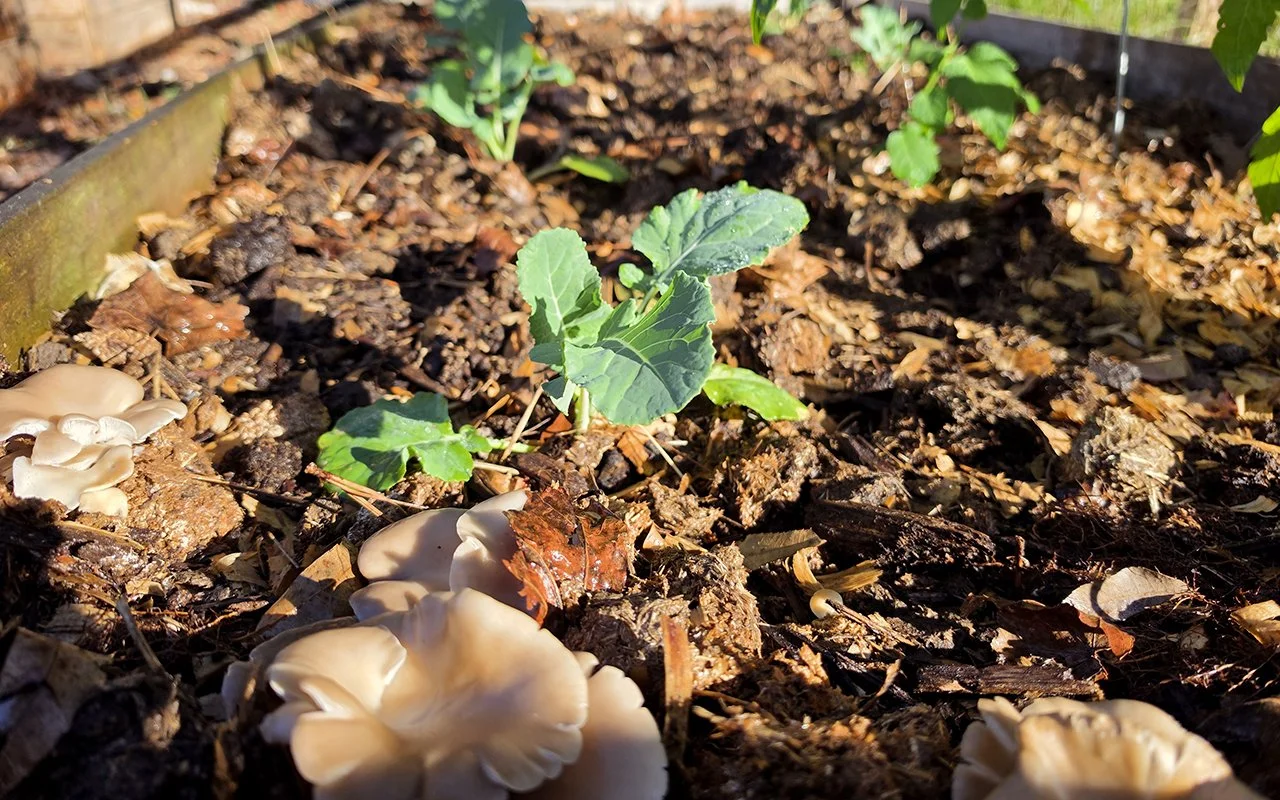
And apparently, a few oyster mushrooms weren't quite finished growing!
A Little Farm-to-Garden Recycling
One of my favorite things about having a small farm is finding ways to make different parts of the operation work together.
Our horses produce manure, our chickens contribute their share, and our gourmet oyster mushroom operation regularly produces spent growing blocks.
Each of these materials has something different to offer the garden.
Composted horse manure adds organic matter that can help improve soil structure, moisture retention, and overall soil health.
Properly composted chicken manure provides nutrients, particularly nitrogen, that can support plant growth. It's a powerful amendment, though, so a little goes a long way.
Spent mushroom blocks are another interesting addition. Our oyster mushrooms grow primarily on hardwood-based substrate, and even after the blocks have finished their productive life in the fruiting tents, there's still plenty of organic material left behind.
As the substrate continues to break down, it can contribute organic matter to the soil and support the biological activity that makes a healthy garden possible.
Individually, these are useful resources. Together, they make for an interesting soil-building experiment.
Preparing the Beds and Letting Nature Do Its Thing
Rather than simply throwing everything into the beds and immediately planting, I mixed the amendments into the existing soil and allowed the beds time to rest.
This is particularly important when working with manure. Fresh or insufficiently composted manure can contain pathogens, excess salts, or concentrated nutrients that may damage plants or create food safety concerns.
Allowing properly prepared amendments to settle and continue breaking down gives the soil time to stabilize before planting.
Of course, there's no universal waiting period that makes every manure amendment safe for vegetable gardening. Composting methods, temperatures, maturity, and the types of crops being grown all matter.
Once the beds were ready, I finally added my fall plants.
There's something rewarding about planting into soil you've spent time improving, especially when so much of what went into it came directly from your own farm.
The Oyster Mushrooms Are Still Growing
Here's where things got particularly entertaining.
Despite being considered "spent," some of my mushroom blocks apparently had other plans.
Not long after refreshing the beds, I started noticing oyster mushrooms popping up right out of the garden soil!
And not just one or two. I've been seeing plenty of happy little mushrooms making an appearance.
It's a great reminder that a spent mushroom block isn't necessarily biologically inactive. It simply means the block is no longer producing enough mushrooms to justify keeping it in the controlled growing environment.
Once outdoors, favorable moisture, intor and temperatures can encourage the remaining mycelium to produce another flush.
Seeing those oyster mushrooms growing alongside my garden plants has been one of my favorite surprises of the season.
Of course, mushrooms appearing in the soil don't automatically mean the soil is healthier or that the garden plants will perform better. But they do show that some of the fungal life from those blocks is still active.
And I think that's pretty neat.
Building Better Soil, One Season at a Time
South Georgia soil can be challenging, particularly when you're dealing with sandy areas that don't hold moisture or nutrients especially well.
That's part of what makes adding organic matter so appealing.
Over time, well-managed compost and other organic amendments can improve soil structure, water retention, and the conditions that support healthy root growth.
I'm especially curious to see how the spent mushroom substrate performs as it continues decomposing in the beds.
Will the soil retain moisture better? Will the plants grow more vigorously? Will the amendments make a noticeable difference in the next growing season?
Those are all things I'm looking forward to observing.
Making the Most of What We Already Have
The more I experiment with mushroom cultivation, the more I appreciate how many uses there are for the materials left behind.
I've already been exploring whether spent mushroom blocks might help improve some of the sandy, grassless areas of our horse pastures. Now they're finding another purpose in our garden beds.
It's a nice little cycle.
The horses and chickens contribute to the compost. The mushroom operation provides additional organic material. That material goes back into the garden, where we grow more food.
And sometimes, the mushrooms decide to grow a little more food of their own.
I don't expect every experiment to be a perfect success, and I'm sure there will be lessons along the way. But that's part of the fun of small-scale farming.
For now, the fall garden is planted, the soil has been refreshed, and the oyster mushrooms are making themselves right at home.
Stay tuned to see how this season's garden grows!
