
Small Acreage and Horses: Rethinking What “Healthy” Looks Like
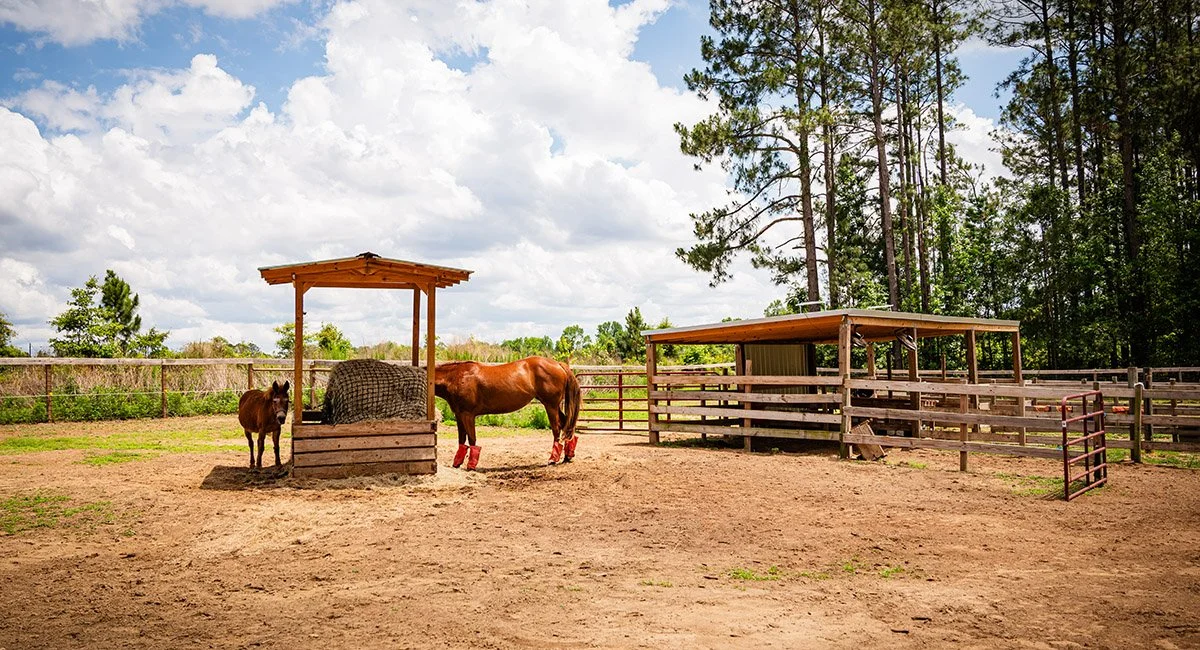
There’s a common assumption about horse property that goes something like this:
“Horses need wide open pastures with lots of grass. That’s how they’re happiest and healthiest.” Excuse my bad paraphrasing, but you get the gist. For the record, if I had a dollar every time some well-intentioned person said something similar to me, I’d actually be able to afford the 100 acres that they expect me to have.
If you’ve ever looked at a picture of a meadow with a bunch of happy grazing horses at sunset, you can see why people think this. Green grass, breezes, a horse looking contemplative in the distance—it’s an appealing image.
It’s also not universally realistic. Not everywhere in the world looks like that picture. Here in southeast Georgia, with heat, humidity, gnats, and pasture grasses that can feel more like a wild buffet than a managed feeding plan, “wide open pastures with lots of grass” isn’t always the ideal.
And that’s not just a southern thing. Small acreage horse farms—from the rolling foothills of England to the scrublands of Australia, and from compact European farms to hobby farms in the northeastern US—have been quietly evolving what success actually looks like.
What “Small Acreage” Really Means
When most people picture a horse farm, they imagine dozens of acres with pasture after pasture. But in reality:
Many hobby or lifestyle farms operate on 2–10 acres
Space is a premium in suburban and exurban areas
Owners balance livestock with other land uses
Soil, climate, and forage quality vary wildly
Across these varied geographies, there’s a pattern: Healthy horses on small acreage require thoughtful management, not just big grass fields.
Trend 1: Managed Forage, Not Unlimited Grazing
Successful small acreage setups don’t rely on horses grazing unrestricted grass.
In fact, for a surprising number of horses, too much grass is the problem. Horses with:
Laminitis
Cushings/PPID
Metabolic syndrome
Sensitive digestion
Seasonally high NSC (Non-Structural Carbs)
…can thrive on limited pasture access, not endless grazing.
That’s one reason many farm owners around the world use:
Sacrifice paddocks, aka dry lots
Rotational grazing
Grazing muzzles
Targeted turnout times
In other words, you don’t need wide-open grass fields for horses to be healthy—you need the right grass exposure and forage options for the horse.
Trend 2: Purposeful Shade (and Protection)
In cooler climates, this gets less attention. In regions like southeast Georgia, however, shade isn’t optional—it’s essential.
Horses in hot, humid climates face:
Heat stress
Increased insect pressure
Fatigue from high temperatures
Dehydration
Across successful small-horse-acreage systems in similar climates, shade is a requirement, not an afterthought.
Folks put shade where it matters:
Along turnout areas
Near water and feeders
Near shelter lanes in dry lots
Using trees plus roofed run-ins
Strategic use of sunshades
With deliberate orientation for airflow
Shade isn’t a luxury. It’s part of keeping horses well in climates where the thermometer and humidity are both stubborn.
Trend 3: Pasture as Managed Resource, Not a Free Buffet
Across various regions, successful small-acreage farmers think of pasture as a resource to manage, not an open buffet.
Healthy practices include:
Regular soil testing
Targeted reseeding
Weed control
Strategic rest periods
Dragging, harrowing, rolling
Strategic sacrifice areas during wet or drought
This kind of management fights:
Bare dirt patches
Poisonous weeds
Worms/Parasites
Mud issues
Overgrazing
And on small acreage, you can’t ignore any of these without seeing them quickly.
Trend 4: Individual Horse Needs Drive Turnout
Every horse is different.
Some thrive grazing on morning grass.
Others look better on limited access and more hay.
Some can’t regulate their body temperature and require “forced” shade times
Some are fine barefoot in sand.
Others need to live in shoes regardless of footing.
Horse owners adjust turnout to the horse’s need, not pasture space.
This means:
Not assuming grass is always good
Recognizing tendencies toward metabolic issues
Setting turnout times by season and temperature
Trend 5: Multiple Surfaces Are Normal
A healthy small-horse acreage environment isn’t one giant grass field.
Instead, it’s a mosaic:
Grass pasture with controlled access
Sacrifice paddocks
Dry lots or bare-ground areas
Gravel or sandy arenas
Shaded loafing spots
So What Does That Mean for Horse Owners in Southeast Georgia?
Here, big pastures dappled in green are lovely in theory, but often conflict with reality:
Not everyone can afford 10+ acres for their horse’s fields
Heat increases insect pressure, which requires monitoring and management
Grass grows aggressively in some seasons and is minimal in growth and nutrition during other seasons
Understanding that your forage can be supplemented by grass, not the sole source of calories in your horse’s diet.
Some horses need limited grass to stay well
Heat management is key during the summer months
A Final Observation
With small acreage farms, success rarely looks like the romantic ideal of endless grassy fields.
Instead it looks like:
Understanding your climate
Working with your soil
Observing your horse
Being willing to adapt what “should work” into what actually does
Wide pastures are lovely.
They aren’t the only way.
They definitely aren’t a requirement for healthy horses.
You don’t need a picture-book field—just enough thoughtful management to keep horses comfortable, safe, and healthy where they actually live.
